

Let’s start our conversation by showing the path Scallier has taken from its inception to today. How has your business developed over the past years? How can you define Scallier’s main areas of activity?
Since the start of its operations in 2011, the company has focused on servicing commercial real estate in the retail and service sector in Poland. In 2018, Scallier’s operations were expanded to include the Romanian market. For 15 years, we have been developing and improving our proprietary model of commercial property management, adapting it to changing market realities and investors’ expectations.
Our business is focused on four complementary pillars. Property management is carried out through a specialized company, Scallier Property Services, providing full control over the operational efficiency of the assets.
At the same time, we carry out commercialization and re-commercialization processes of commercial facilities, focusing on maximizing the value of the property. Another area of Scallier’s activity is investment consulting, which includes transactions for the purchase and sale of commercial real estate.
In parallel, as part of its development and investment activities, Scallier develops projects in the retail sector, both as a service to investors and developers and in cooperation with business partners.
In 2025, Scallier communicated the expansion of its organizational structures. What is the reason for the need for the changes being made?
In the past year, Scallier has been engaged in the process of further strengthening the management structures within its Polish operations, and we intend to continue this process this year. Its key element was the assumption of the position of Head of Property Management last April by Rafal Langer – a specialist with over 20 years of experience in commercial property management. Rafal’s competencies as head of the department include, both operational support for the team of managers and the development of ongoing projects, as well as the expansion of the business line in the area of property management, which is expected to conquer the scale of our operations and bring an increase in portfolio efficiency.
At the same time, last year Scallier significantly strengthened its competence in the area of investment consulting. Since September 2025, Michal Radomski has been responsible for the development of this pillar of the company’s business, supporting institutional and private investors in the implementation of investment strategies, capital allocation and the construction and optimization of real estate portfolios. This has significantly increased the company’s potential to comprehensively support clients in decision-making processes, manage the sale of assets and represent property owners and developers in market transactions.
Consistent expansion of the team and implementation of new organizational solutions allow us to offer clients fully integrated consulting services, while increasing the operational scale in the area of commercial property management.
Current negotiations with potential clients regarding the acquisition of the management of more facilities, including investment portfolios with a dispersed location structure, as well as the intensification of activities in the area of commercialization of retail space, create a real basis for a significant increase in the scale of operations and growth of our market share.
Let’s talk about new investments. You are currently preparing several development projects that are at various stages of completion. What kind of investments are they?
Scallier’s portfolio includes projects related to the construction, expansion and modernization of retail parks and regional shopping centers. We are involved in the overall preparation of projects, the implementation of investments and their commercialization.
Scallier is currently in the process of commercializing several customer-led developments, which are located in Torun, Bydgoszcz, Ruda Slaska, Zabrze, Darlowo and Swietochlowice. Their total commercial area (GLA) exceeds 40,000 sqm.
At the same time, in the development department, we are proceeding with the implementation of new facilities, a retail park in Zabrze is at the construction stage. and a pavilion in Boleslawiec is under reconstruction. Other projects are in the preparatory stage. All investments are carried out by Scallier in an end-to-end model – from the stage of land acquisition, through commercialization and marketing of the projects, to the final management of the facilities.
What development strategy is Scallier currently pursuing? What assumptions has the company made for 2026?
We plan to continue operations in the current scope, consistently developing the porttfolio of managed properties. In Poland, the company handles, both facilities of private owners, including some from the beginning of the company, and properties owned by institutional clients. Scallier currently manages more than 50 developments with a total area of more than 75,000 sqm. The company’s priority is to significantly increase the scale of this business, given the growing importance of management quality in the commercial real estate market.
Our goal is to double the area under management to 150,000 sqm, which is being achieved, among other things, by expanding the team, separating a dedicated management entity and implementing modern IT tools. Property owners, developers, investors and asset managers are invited to cooperate.
The second pillar of the company’s business is the commercialization of projects, usually conducted on an exclusive basis. Currently, the company is involved in the commercialization of about 50,000 sqm of retail space in developments scheduled to open in 2026-2027.
In parallel, in the development department, we plan further projects, providing our investors and partners with comprehensive investment services – from site selection and land purchase, through construction and commercialization, to commissioning. Typically, we also include management of completed facilities and support the sale of properties as an agent. We operate in this operating model, both in Poland and Romania.
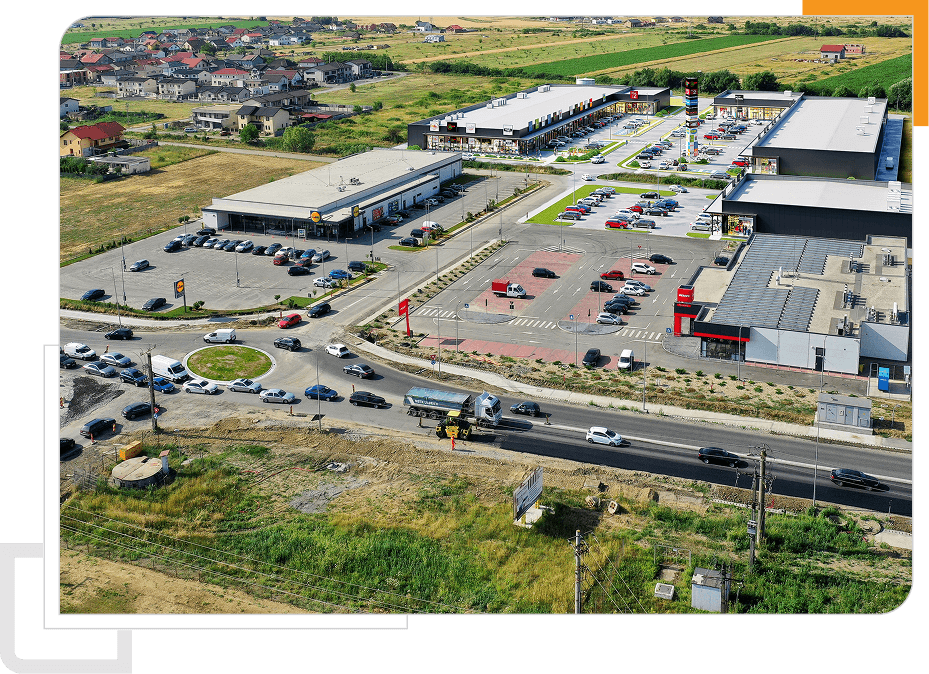
In the Romanian market, Scallier currently manages eight retail parks developed and commercialized by the company in recent years. In 2026, we plan to continue these services, while maintaining high quality management and optimizing operational performance.
In the past year, we have seen a continuation of investment expansion in the retail segment, especially in smaller cities. What challenges does the industry face at the threshold of 2026? What is currently the biggest barrier to new projects?
The stock of the retail market in Poland is growing at an impressive rate. In recent years, investments in the sector have been dominated by retail parks and convenience centers. The key factor for new projects is the location and its attractiveness in the opinion of tenants, as well as adequate transportation accessibility of the land.
The shape of the supply of new developments is determined primarily by tenants, among whom retail chains dominate, especially in medium and small cities, where the largest number of retail facilities in this format are currently under construction. At the same time, the number of localities that can be considered saturated and crossed off the list of potential locations is growing.
For companies like Scallier, this is a strategically important time. The effective preparation and launch of new development projects is one aspect of the business, but equally important is the efficient management of already completed facilities, both in the operational and technical areas, as well as in cooperation with tenants and in the context of the efficiency of investment portfolios.
As more cities are annexed by leading retail chains, the potential for further expansion is gradually diminishing. The retail park market in Poland is approaching the saturation stage and, if the current rate of investment is maintained, could reach it in the next two years.
How is Scallier dealing with the aggressive expansion of competitors in cities with populations of less than 20-30,000? Are we in danger of “cannibalization” of projects in locations where retail parks are built too close to each other?
There are still many white spots on the Polish retail map. The race for county towns and larger community centers is currently underway, but after two to three years of intensive expansion, the market will verify some of the newly established parks.
In many cases, investments made in counties are initiated without a strong market rationale. Lease agreements are mostly for five years, with the exception of grocery operators who sign long-term contracts for 10-15 years. In cities with two or three retail parks, some facilities will soon face the need to renegotiate contracts or attract new tenants.
Our experience indicates that in cities with up to 20,000 residents, one retail park is optimal, which means that the market may soon see the first closures of facilities in less promising locations.
In smaller cities, we anticipate an increase in vacancy in older properties in favor of new, larger parks that will “close” local markets. Redevelopment of obsolete properties, including former chain supermarkets 10 years old or more, also remains an important direction. We are also looking in this direction for the development of Scallier’s activity in the coming years.
At the same time, we see increasing development potential in larger urban centers and suburbs of major cities. The market is seeing a trend toward larger retail projects that meet the growing demands of tenants and the dynamics of local markets.
What is the profitability of retail parks? When developing new projects, is it now more difficult to “prove” the assumed yield to the investor?
Smaller retail facilities can generate an annual return of 7-8%, depending on the class of property, location, length of leases and quality of tenants, including the presence of grocery operators. Investors with an undeveloped property, ready to engage in the development process, can expect a higher return than with the purchase of a completed facility.
The market is consolidating, professionalizing and gradually saturating. Rising development costs, higher interest rates and the cost of capital, as well as pressure on rental rates are limiting the margin space for developers.
The lengthening investment preparation process also remains one of the key challenges, slowing the pace of new projects. At the same time, the availability of attractive undeveloped land is steadily declining, and competition in the market is becoming fiercer.
Both the implementation and management of facilities today require more work. Increasing regulatory requirements and tenant expectations are increasing the complexity of operational processes.
In the context of acquisitions, current prices do not fully reflect rising manufacturing costs, cost of capital or revenue generated, which limits the dynamics of transaction volume. Selling under these market conditions is not always the optimal solution.
Rising property maintenance costs have a significant impact on the value of assets, so specialized service, based on effective cooperation and good relations with tenants, is becoming a key factor affecting the profitability and long-term value of investments.
Is the standard tenant mix in new developments still sufficient? What are the challenges of introducing gastronomy, popular services or entertainment zones that customers expect into retail parks?
Our key task is to verify the local market and analyze tenants in order to create the right mix, optimize rental rates and introduce solutions to increase the attractiveness of the retail and service offer of the facilities.
The retail park sector has been undergoing very dynamic changes in recent years. Just a decade ago, more than half of the chain brands that are now developing in this format were not present in Poland. We are also seeing a trend of chains entering retail parks, which previously only opened stores in large shopping centers.
In major urban centers, retail parks are evolving from quick shopping functions into local mixed-use destinations. In addition to traditional retail, they now offer a growing range of services, including dining, fitness, medical care, entertainment and e-commerce outlets, fitting in with the concept of 15-minute cities. By commercializing larger facilities, we are developing offerings related to fashion, sports and health and beauty, responding to consumer expectations.
The latest interesting trend, however, is the presence of car dealerships in retail parks. New car brands, including Chinese manufacturers, are entering the Polish market, looking for showroom space, indicating the ever-emerging new commercial opportunities in this segment.
Scallier is active in the Romanian market. What was the reason behind the decision to choose it?
We have been observing the Romanian market since 2015, and in 2017 we participated in the first conference on the development of the commercial real estate sector there. We started real activities leading to cooperation with a group of investors in 2018.
Over the next five years, we developed eight retail parks, one of which has already been sold to a fund managed by a Romanian bank. The last facility opened in mid-2025. We currently manage a portfolio of retail parks in Romania with a total area of 70,000 sqm.
The Romanian market is growing rapidly, and the saturation level there is still not as high as in Poland, creating significant growth potential in the medium term. Scallier’s efforts in Romania are focused on continuing to manage these facilities efficiently, while ensuring their stable profitability and attractiveness to tenants and investors.
To what extent does the scope of operations in Poland and Romania differ, and to what extent are they complementary? Is the market strategy identical in both countries?
Scallier ‘s scope of operations in Poland and Romania remains fundamentally consistent and is based on providing comprehensive services to the retail sector. The company implements projects in a full development cycle, including land acquisition, preparation and optimization of the design concept, supervision of the development process, and subsequent commercialization and management of completed facilities. Scallier develops projects from scratch and is responsible for their long-term administration, ensuring consistent implementation of the business strategy and high operational efficiency at every stage of the investment lifecycle.
The Romanian market, currently in a phase of dynamic and intensive growth, is an area of particularly broad investment and development activity for us. The scale and pace of development in this market are conducive to a wide range of projects, both in terms of investment and operations. And since our clients are non-Romanian entities, Scallier also plays an important role there in the area of asset management, managing developed properties and maximizing their long-term investment value.
Do more Central and Eastern European countries appear in the company’s plans for the coming years?
The year 2026 will be a time for our company to fully concentrate its activities on the Polish and Romanian markets, which still offer great opportunities for development. The company’s strategy for the next few years includes the development of four key areas of activity: commercialization, real estate management, transaction advisory, and implementation of development and investment processes on behalf of investors and in partnership. We plan to develop our portfolio of projects and maximize their market value.
Bartosz Nowak will speak during the conference portion of the #SCF2026 fair, which will be held March 24-25 at the Legia Warsaw Stadium. The Scallier team will also be present during the event.
We invite you to meet directly and talk about the commercial real estate market.